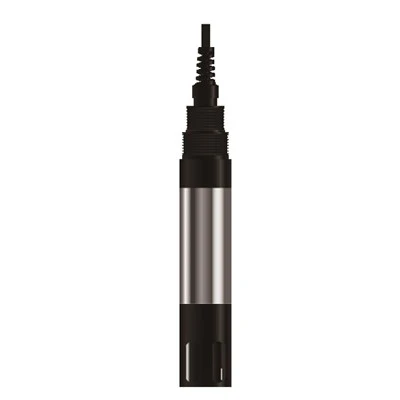
If you’ve ever worked in water treatment, aquaculture, food and beverage processing, or even basic lab testing, you’ve probably encountered ORP sensors and pH sensors. They’re both small, unassuming tools that look like they could do similar jobs, but here’s the thing: I’ve been supplying ORP sensors for over a decade, and I’ve lost count of how many customers have come to me asking, “Can’t I just use one of these instead of the other?” ORP Sensors

Early on in my time in this industry, I made the mistake of assuming everyone knew the difference. A local brewery called me in a panic once, saying their ORP sensor was broken and they’d tried swapping it out for a spare pH sensor they kept on hand—only to end up with a batch of spoiled beer that cost them thousands. That’s when I realized how critical it is to break down these two tools clearly, especially for anyone who’s new to industrial or water quality testing. If you’re relying on one when you need the other, you’re not just wasting money on the wrong equipment—you’re risking product quality, regulatory compliance, or even ecosystem safety if you’re monitoring natural waterways.
Let’s start with the basics, in plain terms. pH sensors measure acidity or alkalinity, that’s their whole job. They’re calibrated to the concentration of hydrogen ions (H+) in a solution, right on a 0 to 14 scale. A pH of 7 is neutral, like pure water; below 7 is acidic, above is alkaline. Think of vinegar—it has a pH of around 2.5, bleach is about 12. That’s all pH is. Every solution has a fixed number of H+ ions, and pH sensors are built to count that. Every pH sensor I supply is calibrated to match standard buffers—four, seven, and 10 pH, usually—so you know exactly what reading you’re getting. You use pH sensors when you care about how acidic or basic something is: a swimming pool needs a pH between 7.2 and 7.8 to keep chlorine working, pickling brine for vegetables needs a specific low pH to kill bad bacteria, and lab samples for soil testing use pH to tell farmers what nutrients their land can absorb.
ORP is totally different, and that’s where most people get tripped up. ORP stands for Oxidation-Reduction Potential, sometimes called redox potential. It doesn’t measure ions of any single substance—it measures the solution’s ability to gain or lose electrons, to oxidize or reduce. Oxidation is when a substance loses electrons (like iron rusting), reduction is when it gains them. The ORP reading is a millivolt (mV) number, not a pH-like scale. A positive ORP means the solution is oxidizing—it’s got a lot of molecules that want to grab electrons. A negative ORP means it’s reducing—it’s got extra electrons to give away. The higher the positive number, the stronger the oxidizing power; the lower (more negative) the number, the stronger the reducing power.
Let me use a swimming pool example because that’s relatable. You need both pH and ORP for a pool, and one can’t replace the other. If your pool’s pH is off, chlorine doesn’t work as well at killing bacteria—but a normal pH reading won’t tell you how effective your chlorine is. Chlorine’s job is oxidation, right? So the ORP reading will tell you how much oxidizing power your pool water has, which is directly tied to how safe it is. A typical residential pool needs an ORP of at least 650 mV, regardless of what the pH is. If you just check pH, you could have chlorine that’s the right acidity but totally inactive, leaving the pool full of bacteria. That’s exactly the kind of mistake that brewery made with their beer. They thought a pH sensor would measure the oxidation needed for their fermentation process, and it didn’t even come close.
Now, let’s dive deeper into how each sensor works, because that’s why their readings are so different. A pH sensor has two main parts: a glass electrode and a reference electrode. The glass part is super sensitive to H+ ions. When it’s dipped into a solution, H+ ions stick to the glass surface, creating a tiny electrical voltage. The reference electrode gives a stable, constant voltage, so you can compare the two and calculate the pH. The glass has to be kept moist, usually stored in buffer solution, and if it dries out, it takes a long time to get accurate readings again. That’s why people often keep spare pH sensors on hand, which was part of that brewery’s problem—their spare was probably already dried out and not calibrated.
An ORP sensor works totally differently. It has a sensing electrode, usually made of inert metal like platinum or gold, and again a reference electrode. The reference works the same way as a pH sensor’s, but the sensing metal doesn’t react to specific ions—it reacts to the overall electron activity in the solution. When you dip it in, the metal’s surface picks up or loses electrons from the surrounding solution, creating a tiny voltage that’s measured in millivolts. No single ion is the focus here; it’s the total electron flow. ORP sensors don’t care if those electrons are coming from chlorine, oxygen, or any other chemical—they just measure the solution’s overall tendency to react. That’s why ORP is so useful for disinfection, water treatment, and even fermentation, where the total reactivity matters more than the acidity.
Let’s talk about when to use each, because that’s the question that matters most to most people. When do you pick pH, and when do you pick ORP? If you need to measure or control acidity/alkalinity, pH is your tool. Think: brewing wort, adjusting soil pH for crops, testing battery acid, making skincare products that need a specific acidity to be stable. If you need to measure oxidation or reduction activity—how well a disinfectant is working, how fermentation is progressing, how wastewater is breaking down contaminants, even how a spa’s chlorine is performing—ORP is the right choice.
Wait, let’s use another example to make this concrete. Wine fermentation: When yeast turns sugar into alcohol and CO2, it changes both pH and ORP, but for different reasons. The pH drops as acids are produced, which tells you how the fermentation is progressing in terms of acidity balance. But ORP tells you how much the yeast is able to do its job—yeast is a reducing organism, so as it works, the ORP of the wine drops to a range that’s ideal for fermentation. If the ORP is too high, that means there’s too much oxygen getting in, which can cause spoilage bacteria to grow, ruining the wine. You can’t get that oxygen or spoilage risk from a pH reading alone, which is why winemakers I supply rely on ORP sensors every harvest.
Another big area is wastewater treatment. Municipal wastewater plants use both sensors, but for different steps. The primary treatment uses pH sensors to adjust pH before adding chemicals that help settle solids—too acidic or too alkaline, and those chemicals won’t work. But during the disinfection step, after the water is filtered, ORP sensors are used to monitor the chlorine or ozone’s oxidizing power. You need a high enough ORP to kill E. coli and other pathogens, but too high means you’re over-chlorinating, which creates harmful byproducts like trihalomethanes. That balance is impossible to get right with just a pH sensor.
Aquaculture is another space where people mix these up all the time. Fish need specific water conditions to survive, and they’re sensitive to both pH and ORP, but for different reasons. pH tells you if the water’s acidity is right for the fish species—most freshwater fish need a pH between 6.5 and 8.5. But ORP tells you how much toxic ammonia, nitrite, and sulfide are in the water, because those are reducing compounds. If ORP is too low, those toxins build up and can kill fish, even if the pH is perfect. I’ve had aquaculture customers come to me after losing a whole tank of tilapia because they only monitored pH and missed the low ORP reading that meant toxic waste was building up. That’s why I recommend pairing both sensors for aquaculture systems, not just one.
Now, what about common misconceptions? Some people think if you have pH, you don’t need ORP, or vice versa. That’s only true in very specific cases. For example, if you’re just adjusting the pH of a solution to a target number, you only need pH. But if you’re using chlorine to disinfect that same solution, you need ORP to make sure the chlorine is actually working, not just sitting there at the right pH. Another misconception: ORP is just a more complex type of pH. No way. They measure completely different properties, as we covered with the sensors’ internal components, and the readings are on totally different scales. You can’t convert an ORP reading to pH or vice versa—they’re separate measurements for separate things.
Maintenance is another big difference that people don’t talk about enough, especially if you’re relying on these sensors for continuous monitoring. pH sensors need regular calibration, usually every 1 to 3 months, depending on use. They also need to be cleaned regularly—any dirt or residue on the glass electrode will block the H+ ions from reaching it, leading to inaccurate readings. And if the glass dries out, you have to soak it in buffer solution for several hours before it works again, which is a hassle. ORP sensors, while they also need calibration (usually with ORP standard solutions, like quinhydrone or platinum reference standards), tend to hold their calibration longer, especially in clean solutions. The platinum sensing electrode is more resistant to residue buildup than the glass in pH sensors, though in dirty or high-protein solutions (like food processing or wastewater), both need regular cleaning to avoid fouling.
Let’s circle back to that brewery story, because it drives this all home. The customer called me in a panic at 7 a.m., said their batch of IPA was ruined because they’d tried using a pH sensor to replace their broken ORP sensor during fermentation. They told me their pH was reading 4.2, which was normal for that stage, but their beer had a sour, off taste and a hazy appearance that wasn’t right. I sent a tech out the same day with a calibrated ORP sensor, and within an hour, we found the ORP was at 250 mV, when it should have been around -100 mV for that fermentation stage. The high ORP meant oxygen had gotten into the fermenter, allowing spoilage bacteria to grow, even though the pH was perfect. We adjusted the sensors, flushed the lines to remove the excess oxygen, and they were able to salvage a smaller portion of the batch. That customer is now one of my most loyal clients, because he learned firsthand that one sensor can’t do both jobs.
If you’re still wondering which sensor you need, start with what you’re trying to measure. If your goal is to know how acidic or basic your solution is—think acidity for food, soil testing, pH adjustment for chemical processes—go with a pH sensor. If your goal is to measure oxidation or reduction activity—think disinfection, fermentation progress, wastewater treatment, water quality for aquariums or aquaculture—ORP is the right call. And a lot of the time, you’ll need both, like in pool maintenance or winemaking, because they tell you different parts of the story.
If you’re in the market for new sensors, or you’re not sure if what you have is the right fit for your process, don’t guess. I’ve been in this business long enough to know that buying the wrong sensor costs more in the long run—from ruined products, wasted time, and even compliance fines if you’re in a regulated industry like water treatment or food processing. I work with all kinds of clients, from small home brewers to large municipal water districts, and I can help you figure out exactly what you need, whether that’s a single sensor, calibration services, or replacement parts.
Don’t take the risk of using the wrong tool for the job. Reach out to discuss your specific application, and we can make sure you have the right equipment to keep your processes running smoothly and your products on spec.
Online DO References
- Metcalf & Eddy. Wastewater Engineering: Treatment and Reuse. McGraw-Hill Education.
- Clesceri, L.S., Greenberg, A.E., Eaton, A.D. Standard Methods for the Examination of Water and Wastewater. American Public Health Association.
- Bates, R.G. Determination of pH: Theory and Practice. John Wiley & Sons.
- Hanson, C.V. Aquaculture Water Quality Management. Elsevier.
- Boulton, R.B., Singleton, V.L., Bisson, L.F. Wine Microbiology and Biotechnology. Springer.
Shanghai Multiweal Environmental Technology Co., Ltd.
As one of the most professional orp sensors manufacturers in China, we’re featured by quality products and low price. Please rest assured to buy discount orp sensors in stock here from our factory. Contact us for custom service and OEM&ODM service.
Address: 5-2, Lane 801, Qiangye Road, Sheshan Town, Songjiang District, Shanghai
E-mail: mtw@shmultiweal.com
WebSite: https://www.multiweal.com/
