If you’ve ever walked through a commercial office, a retail store, or even a small industrial workshop, chances are you’ve glanced past something that keeps power and data cables neatly organized: light duty cable tray. As a supplier who’s worked with this product line for nearly a decade, I get asked the same question all the time—often from project managers, electricians, and even small business owners who thought their space’s layout or cable needs were too “one size fits all.” That question? “Can light duty cable tray be customized in size?” Light Duty Cable Tray
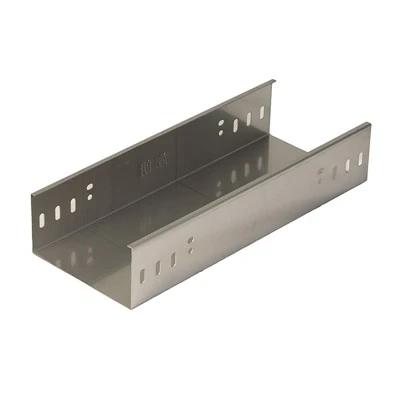
The short answer is yes, but there’s a lot more to it than just cutting a standard tray to fit a random space. Customization for light duty cable tray isn’t about ignoring design rules; it’s about working with the core purpose of these trays: supporting smaller loads (think low-voltage data cables, communication wires, or light power cables under 50 pounds total) while keeping installations safe, compliant, and cost-effective. Let me walk through what that actually looks like, from the conversations I have with clients every single day to the technical details that make custom trays work.
First, let’s set the baseline. Standard light duty cable trays come in a handful of common sizes: 2-inch-wide, 4-inch-wide, and 6-inch-wide, with lengths up to 10 feet per section. They’re great for straight runs in open ceilings or along warehouse walls where layout is predictable. But most real-world projects have quirks. A small boutique might have to route cables around a load-bearing column that’s 12 inches wide, cutting a standard 10-foot tray would leave awkward gaps or require extra bends that add up over time. A tech startup’s office might have a mezzanine that’s only 8 feet deep, so a standard 10-foot tray would hang over the edge unnecessarily. Or a university’s lab might need trays that fit around existing ductwork, with angled bends that aren’t available in prefabricated standard sections. That’s where customization comes in.
When a client reaches out asking for a custom size, the first thing we do is clarify what “custom” actually means. It’s not just trimming a tray down to a random length. We work with four main customization variables that align with light duty cable tray’s intended use: width, length, bend radius, and specialty cutouts.
Width is the most common customization request. For example, a small retail space might only need to route 12 Cat6 cables and a few phone lines, which only take up 1.5 inches of space. A standard 4-inch tray would be oversized, meaning the client is paying for extra material they don’t need, and the tray would hold more cables than required, creating a risk of overloading (even if light duty, overfilling a tray can lead to cable damage from friction or overheating). We can fabricate trays as narrow as 1.25 inches, sized exactly to the total cross-sectional area of the cables being run. That’s a win for both cost and space. We once worked with a startup that had a 50-foot run along a wall between two workstations; they initially quoted a 4-inch tray, but after we calculated their total cable diameter, we made a 1.75-inch tray that cut their material cost by 35% and fit perfectly in the narrow gap between the wall and their desk bases.
Length is another big one. Standard light duty cable tray sections are 8 or 10 feet, but for installations with tight turns or no space for splices (each splice adds labor and a potential point of failure), we can make sections up to 12 feet long, or as short as 1 foot for runs that only need to connect two junction boxes. A client building a small medical clinic recently needed trays to line the edges of a new exam room ceiling; each run was only 3.5 feet long, so we skipped cutting down 10-foot sections and fabricated custom 3.5-foot trays, cutting their installation time by half because they didn’t have to make as many cuts on-site.
Bend radius is a technical point that’s easy to overlook, and it’s where a lot of clients go wrong when they try to “customize” on their own. Light duty cable trays use two main bend types: 90-degree inside and outside bends, and curved bends for cables that need to turn without sharp angles. Pre-made curved bends usually have a 12-inch radius, but for thicker data cables (like fiber optic runs, which have larger bend radius requirements to avoid signal loss), we can fabricate curved bends with a 18-inch or even 24-inch radius, sized exactly to the client’s cable specifications. I once had an electrician call in a panic because he’d tried to bend a standard tray around a 18-inch duct, and the sharp kink he’d created damaged 12 fiber cables. We made a custom 18-inch curved bend for his next run, and he told us later that it saved him over $1,000 in replacement cables.
Then there’s specialty cutouts. A lot of clients need to pass cables through trays without having to feed them through holes later, or cutouts for mounting lights, sensors, or other fixtures. For example, a small server room might need cutouts every 2 feet to run power cords from the tray to server racks; instead of the standard 1-inch holes, we can cut custom-sized holes that match the exact plug diameter, so cables fit snugly without extra space that would let dust in. We even did a custom tray for a school’s audio/visual lab that had 60 half-inch cutouts for speaker wires, spaced exactly to match the layout of the classroom’s wall mounts. It saved the school IT team hours of drilling holes on-site.
Now, I know what some of you are thinking: “Custom must be way more expensive than standard, right?” That’s a common misconception, especially for light duty cable tray. Because light duty trays are made from aluminum or galvanized steel (both of which are easy to cut and fabricate), the tooling cost for custom sizes is low—especially if you’re ordering more than 10 sections. In fact, for small to medium projects, custom trays can actually be cheaper. Let’s go back to that startup example: they were ordering 12 10-foot 4-inch trays, which cost $18 per section, totaling $216. We made 15 custom 1.75-inch 10-foot trays, which cost $14 per section, totaling $210. Not only was it $6 cheaper, but it fit their space better. For larger orders (like 50+ sections), the cost gap closes even more, because we can run custom cuts in batches, reducing labor time.
Of course, there are limits to what we can customize, and that’s for safety and compliance. Light duty cable tray isn’t designed to hold heavy loads (over 50 pounds total, including cables and the tray itself) or span long distances without support—usually no more than 5 feet between supports for light duty. So a custom tray that’s 10 feet wide or spans 15 feet without a support isn’t something we can fabricate, because it would risk sagging or failing. We also have to follow National Electrical Code (NEC) guidelines for cable fill: light duty trays can only be 40% full for power cables, 50% for data cables, so even if you ask for a custom tray that’s twice the size you need to save a little money, we’ll push back—because overfilling is a fire and safety hazard.
Another limit is lead time. Standard light duty cable trays ship in 1 to 2 business days, but custom orders usually take 3 to 5 business days, because we have to cut, fabricate, and quality check each section. If you’re in a rush, we can do rush custom orders in 2 business days for an extra 10% fee, but we always recommend planning ahead, because rushing can lead to mistakes. Last year, a client called us on a Friday afternoon, needing custom trays for a Monday installation—we got it done, but one section had a slightly off bend, so we had to ship a replacement overnight, which cost more. It’s better to plan a week or two ahead for custom orders.
I’ve been in this industry long enough to see how a lot of projects fail because people stick to standard sizes when customization makes sense. A friend who’s an electrician told me about a coffee shop that tried to use standard 4-inch trays in their shop’s back of house; they had a ventilation duct running along the ceiling, so the standard tray had to sit below the duct, making it hard to access cables for repairs. We made a custom tray that had a 2-inch offset, fitting above the duct, and it only cost $75 more than the standard trays. That small change saved the owner from having to re-do the entire installation a year later, when they needed to add more equipment.
So if you’re someone working on a project with unique space constraints, or if you want to save money by only buying the size you need, custom light duty cable tray is absolutely an option. The key is to come prepared with a few details when you reach out to a supplier: the total number and type of cables you’re running, the layout of your space (including any obstructions like columns, ducts, or walls), and the length of each run you need. A good supplier (like the team I work with) will walk you through the options, explain the limits, and make sure the custom tray is both compliant with safety codes and a good fit for your project.

If you’re ready to discuss your specific needs, or if you have questions about custom sizing for your light duty cable tray project, don’t hesitate to reach out to our team to connect on your next project. We’re here to help you find the right solution, whether it’s a standard size or a custom one that works exactly for your space.
Perforated Cable Tray References
- National Electrical Code (NEC) Article 318: Cable Trays, 2023 Edition
- Underwriters Laboratories (UL) Standard 2065: Standard for Cable Trays, 2021 Edition
- Aluminum Association: Design Guidelines for Aluminum Cable Tray Systems, 2022
- Galvanized Steel Manufacturers Association: Installation Best Practices for Light Duty Cable Tray, 2023
Hebei Jinglang Industrial Co., Ltd.
As one of the most professional light duty cable tray manufacturers and suppliers in China, we also support customized service. We warmly welcome you to wholesale high quality light duty cable tray in stock here from our factory. If you have any enquiry about quotation, please feel free to email us.
Address: Nanxinzhuang Village, Daweihe Hui and Manchu Township, Wen’an County, Langfang City, Hebei Province
E-mail: 18231629992@163.com
WebSite: https://www.jinglangcabletray.com/
