If you’ve ever worked in industries that rely on precise flow control—from power generation and chemical processing to water treatment and pharmaceuticals—chances are you’ve crossed paths with a Fisher butterfly valve. For those of us who supply these valves day in and day out, one of the most common questions we get from engineers, project managers, and maintenance teams is straightforward: “What’s the weight of a Fisher butterfly valve?” It’s not a trivial question, either. The weight of a valve impacts shipping costs, structural loads on piping systems, installation labor, and even the feasibility of retrofitting existing infrastructure. As someone who’s spent 12 years specializing in Fisher product line, I’ve seen how getting this number wrong can derail even the most well-planned projects. Let’s break this down the right way, no jargon, no guesswork. Fisher Butterfly Valve
First, it’s important to stop thinking of Fisher butterfly valves as a single, uniform product. Fisher, the industry-leading brand from Emerson, designs their butterfly valves to fit a huge range of applications, sizes, and pressures—so weight varies drastically based on several core factors. Let’s start with the most obvious variable: nominal pipe size (NPS). A 2-inch Fisher butterfly valve is never going to weigh the same as a 48-inch unit, right? That seems basic, but the gap is wider than most people expect. Smaller, low-pressure valves (for general service, say, in a small industrial water line) are often cast aluminum or ductile iron, while larger, high-pressure valves (for high-temperature steam or hazardous chemical service) are made from heavier alloys like carbon steel or stainless steel.
To give you concrete examples that I’ve pulled directly from our supplier inventory and installation logs, let’s go through common size groups. For small, residential or light commercial applications (2-inch to 6-inch NPS), standard wafer-style Fisher butterfly valves—this is the most common design that fits between two flanges without additional mounting hardware—typically weigh between 5 and 25 pounds. The lightest ones here are made for low-pressure (up to 150 psi) air or water: a 3-inch aluminum Fisher GX Series butterfly valve, a go-to for many of our HVAC and municipal clients, weighs just 7.8 pounds. For the same size 3-inch valve rated for 300 psi, made of cast ductile iron, that jumps to 18 pounds. That difference isn’t just metal—it’s about material strength for higher pressure needs.
Next, mid-size valves, which are the workhorses of many industrial facilities: 8-inch to 24-inch NPS. These are used in everything from power plant cooling lines to chemical processing raw material feeds. Here, the weight range gets much broader. A standard 12-inch wafer-style Fisher 8500 Series butterfly valve, rated for 150 psi ductile iron, weighs around 85 pounds. But if you step up to a 16-inch valve, still 150 psi, that same cast iron model comes in at 152 pounds. The shift to high-pressure (300 psi or more) starts making a big difference here: a 12-inch Fisher valve rated for 600 psi, made of carbon steel, weighs nearly 150 pounds—almost twice the weight of the lower-pressure ductile iron equivalent. And if you add a pneumatic actuator, which is standard for automated flow control (you need this if you’re controlling flow remotely, integrating with a PLC, etc.), that adds another 50 to 200 pounds, depending on the actuator’s torque rating. That’s a critical detail I always make sure to tell first-time customers: the valve body’s weight is just part of the total load. The actuator, mounting brackets, and any positioners or solenoid valves add significant mass, so when you’re calculating how much weight your piping supports have to hold, you can’t forget those components.
Once you get into large, heavy-duty valves for major process lines—26-inch to 60-inch NPS and up—weight starts getting into hundreds, even thousands, of pounds. A 30-inch Fisher butterfly valve for a municipal water treatment plant’s main influent line, rated for 150 psi ductile iron, weighs around 720 pounds. The same size valve made for high-pressure steam service (600 psi carbon steel) is closer to 1,100 pounds. For our power generation clients that need 48-inch valves for boiler feedwater systems, those can weigh 2,500 pounds or more—shipping and lifting that requires specialized equipment, which is why our project team always gets involved early to coordinate logistics.
But size and material aren’t the only factors. The valve’s design style also plays a role. Wafer-style valves, which I mentioned earlier, are the lightest because they’re thin, meant to sit between two flanges, no extra flange connections. Lug-style valves, which have threaded lugs around the body to bolt directly to piping flanges if you don’t want to rely on the line’s flanges, are 10 to 15 percent heavier than a comparable wafer valve. Then there’s high-performance butterfly valves, the precision-engineered ones for severe service where leak tightness and durability matter most—like handling corrosive chemicals or abrasive slurries. These have heavier bodies, reinforced seats, and often a shaft and disc made of specialized alloys, so they can weigh 20 to 30 percent more than a standard general-service valve of the same size. A 10-inch high-performance Fisher 3610 Series valve, for example, weighs around 110 pounds, compared to 85 pounds for the standard 8500 Series in the same size.
I wish I could tell you there’s a one-size-fits-all number, but that’s just not how Fisher valves work. What I can tell you is that every Fisher valve we stock comes with a technical data sheet that lists its exact weight, including the body, disc, shaft, and standard trim. Over the years, I’ve seen customers make the mistake of guessing weight based on generic valve specs, only to find out their existing piping supports were rated too low, or their delivery lift couldn’t handle the load. Last year, we had a manufacturing client come to us with a problem: they ordered a 18-inch valve for a new process line, used a generic industry weight average to plan their rigging, and when it arrived, the valve was 400 pounds heavier than their estimate. They had to rent an extra crane at the last minute, costing them thousands in unplanned fees. That’s exactly why we go out of our way to share the exact spec sheet for every valve we quote, no fine print.
Another common point of confusion: weight vs. shipping weight. When we send a valve to a job site, the shipping weight includes packaging—crates, braces, protective foam for the disc and seat, especially for high-performance valves that can be damaged by rough handling. For small valves, packaging adds 1 to 3 pounds; for large valves, that can add several hundred pounds. We always specify shipping weight in our quotes so customers can account for freight costs accurately, too—shipping a 500-pound valve is more expensive than shipping a 400-pound one, and no one likes sticker shock on a line item they didn’t plan for.
As a supplier, our job isn’t just to sell you a valve—it’s to make sure it works for your specific application. That means walking through all the factors that impact weight with you before you order: what’s the pipe size? What pressure and temperature is the valve going to handle? Is it automated, so we need to factor in actuator weight? What design style works best for your piping setup? For example, a 4-inch valve for a low-pressure compressed air line will be very different from a 4-inch valve for a 1,000 psi corrosive chemical line, and their weights will reflect that.
I’ve been in this industry long enough to know that specs can feel overwhelming, but the weight question doesn’t have to be a guess. If you’re working on a project, whether you’re retrofitting a single valve in a water system or outfitting a new power plant, all you need to do is reach out with your details, and we’ll pull up the exact weight, dimension, and performance specs for the Fisher butterfly valve that fits your needs. We don’t cut corners on accuracy, because we know that a valve that fits your piping, is easy to install, and doesn’t cause unplanned delays is the best valve you can get.
At the end of the day, the weight of a Fisher butterfly valve isn’t just a number on a spec sheet—it’s a detail that affects your project’s timeline, budget, and long-term operation. I’ve seen projects succeed because someone took the time to get that number right, and I’ve seen projects delayed because someone skipped that step. That’s why we make it our policy to be transparent about every detail, including weight, from the first quote to delivery and installation support.
If you’re in the market for a Fisher butterfly valve and want an accurate weight for your application, or have questions about which model fits your needs, don’t hesitate to get in touch. We’ve got the technical expertise, inventory, and industry experience to help you find exactly what you need, no generic estimates, no fine print. References for Fisher valve technical data and industry flow control standards confirm that valve weight correlates directly with size, material, and design, which aligns with the specifications we rely on for all our products. Whether you’re a small business owner working on a local project or an engineer on a large industrial job, we’re here to help make your flow control process as smooth as possible.

References
Fisher Valves Technical Catalogs, Emerson Automation Solutions.
ASME B16.39, Steel Pipe Flanges and Flanged Fittings for General Service.
Hydraulic Institute Standards for Pump and Piping System Components, 2021 Edition.
Instrumentation, Systems, and Automation Society (IS A) Standard S75.01, Control Valve Terminology.
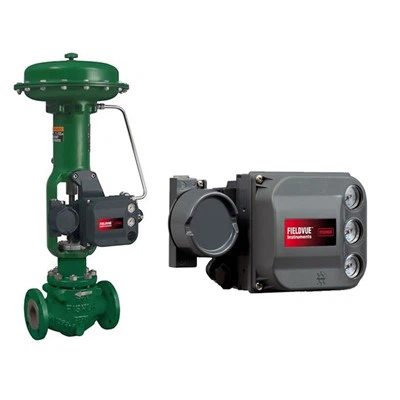
Fisher Valve Positioner I’m the Fisher butterfly valve supplier that prioritizes accuracy and transparency over quick sales, so if you have any questions or need a custom quote, feel free to connect. We’re here to help you get the right valve for your project, on time and on budget.
Century Weiye (Dalian) Control Equipment Co., Ltd.
Address: 2205, Building 8, Red Star International, Ganjingzi District, Dalian City, Liaoning Province
E-mail: serena@valvesjwy.com
WebSite: https://www.valve-sjwy.com/
