In the vast and intricate landscape of power systems, maintaining a stable and efficient flow of electricity is of paramount importance. One crucial component that plays a significant role in this process is the tap changer. As a tap changer supplier, I’ve witnessed firsthand the critical role these devices play and am frequently asked about how they communicate with other devices in the power system. In this blog, I’ll shed light on the communication mechanisms involved, highlighting their importance and real – world applications. Tap Changer
Understanding the Tap Changer’s Role
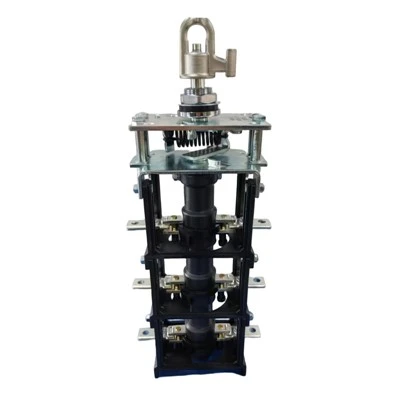
Before delving into communication modes, it’s essential to understand what a tap changer does. A tap changer is a device used in power transformers to alter the turn ratio of the transformer, thereby adjusting the output voltage. This is vital in ensuring that the voltage supplied to end – users stays within an acceptable range, compensating for variations in load demands and fluctuations in the electricity grid.
Communication Requirements in Power Systems
Power systems are complex networks consisting of numerous components such as generators, transformers, switchgear, and protective relays. For optimal operation, these components need to “talk” to each other. Tap changers, in particular, are required to provide information about their status, the position of the tap, and any impending maintenance needs. At the same time, they must receive commands from control centers or other devices to perform necessary voltage adjustments.
Communication Protocols Used by Tap Changers
SCADA (Supervisory Control and Data Acquisition)
SCADA is one of the most commonly used communication systems in power utilities. It allows for remote monitoring and control of power system components, including tap changers. In a SCADA – based setup, the tap changer is equipped with sensors that collect data about its operating parameters, such as the tap position, current flow, and temperature. This data is then transmitted to a central SCADA system, often located at a control center.
The control center can analyze the data and, if necessary, send commands back to the tap changer to adjust the tap position. SCADA systems typically use standard communication protocols such as Modbus, DNP3, or IEC 60870 – 5 – 101/104. These protocols ensure that the data is transmitted accurately and securely between the tap changer and the control center.
For example, in a large – scale power distribution network, the control center can use SCADA to monitor the voltage levels at various substations. If the voltage at a particular substation is outside the acceptable range, the control center can send a command to the tap changer in the associated transformer to adjust the voltage.
IEC 61850
IEC 61850 is a modern communication standard specifically designed for power utility automation. It provides a common language for different devices in the power system to communicate with each other. Tap changers that comply with the IEC 61850 standard can communicate seamlessly with other IEC 61850 – enabled devices, such as protective relays and substation automation systems.
One of the key advantages of IEC 61850 is its object – oriented approach. Instead of simply sending raw data, devices exchange information in the form of logical nodes and data objects. This makes it easier to understand and interpret the data. For tap changers, IEC 61850 can be used to exchange detailed information about the device’s health, including diagnostic data and historical performance records.
In a smart substation environment, IEC 61850 – compliant tap changers can communicate with other automation devices to coordinate voltage control and fault detection. For instance, if a fault occurs in the power system, the protective relay can send a signal to the tap changer through the IEC 61850 network, instructing it to take appropriate actions to isolate the affected section.
Wireless Communication
With the advancement of wireless technologies, some tap changers are now being equipped with wireless communication capabilities. Wireless communication offers several advantages, such as reduced installation costs and greater flexibility. For example, in remote or difficult – to – access locations, wireless communication can eliminate the need for laying extensive cables.
Wireless protocols such as ZigBee, Wi – Fi, and cellular networks can be used for tap changer communication. ZigBee is a low – power, short – range wireless protocol suitable for applications where energy efficiency is crucial. Wi – Fi can provide high – speed communication within a relatively small area, such as a substation. Cellular networks, on the other hand, offer wide – area coverage, allowing for remote monitoring and control of tap changers located in geographically dispersed locations.
A case in point is a rural power distribution network where tap changers are installed in transformers spread across a large area. By using cellular wireless communication, the utility company can monitor and control all the tap changers from a central location, without the need to install expensive wired communication infrastructure.
Real – World Applications of Tap Changer Communication
Grid Voltage Regulation
The primary function of a tap changer is to regulate the grid voltage. By communicating with other devices in the power system, such as distribution management systems (DMS), tap changers can adjust the transformer’s turn ratio in real – time. For example, during peak load periods, when the demand for electricity is high, the DMS can analyze the voltage levels at different points in the grid. If the voltage drops below the acceptable range, the DMS can send a command to the tap changer to increase the output voltage.
Fault Detection and Isolation
Tap changers can also play a role in fault detection and isolation. When a fault occurs in the power system, such as a short – circuit, the tap changer can communicate its status to the protective relays and substation automation systems. By analyzing the tap changer data, these devices can quickly identify the location of the fault and take appropriate actions to isolate the affected section of the grid. This helps to minimize the impact of the fault on the rest of the power system and reduces the downtime.
Predictive Maintenance
Communication between tap changers and other devices can enable predictive maintenance. By continuously monitoring the tap changer’s operating parameters, such as temperature, vibration, and tap position, data can be transmitted to a central analytics system. The analytics system can then analyze the data to detect any signs of potential failures or degradation. For example, if the temperature of the tap changer is consistently rising, it could indicate a problem with the cooling system or excessive electrical load. Based on this analysis, the utility company can schedule maintenance activities in advance, preventing unexpected breakdowns.
Challenges in Tap Changer Communication
Compatibility Issues
One of the main challenges in tap changer communication is compatibility between different devices and communication protocols. In a power system, there may be a mix of old and new equipment, each using different communication standards. This can make it difficult for tap changers to communicate effectively with other devices. To address this issue, some tap changer suppliers offer devices with multiple communication interfaces, allowing them to communicate with a wider range of devices using different protocols.
Cybersecurity
As tap changers become more connected to the power system network, the risk of cyber attacks increases. Cybersecurity is a crucial concern, as a successful cyber attack on a tap changer or its communication system could disrupt the power supply or cause damage to the device. To ensure the security of tap changer communication, suppliers must implement robust security measures, such as encryption, authentication, and access control.
Reliability
Reliable communication is essential for the proper operation of tap changers. In a power system environment, there can be various sources of interference, such as electromagnetic noise and radio frequency interference. These interferences can disrupt the communication between the tap changer and other devices, leading to inaccurate data transmission or failed commands. To improve reliability, tap changer communication systems often use redundancy and error – correction techniques.
Conclusion
As a tap changer supplier, I understand the importance of effective communication in ensuring the reliable and efficient operation of power systems. Tap changers use a variety of communication protocols, including SCADA, IEC 61850, and wireless communication, to interact with other devices in the power system. These communication mechanisms enable functions such as grid voltage regulation, fault detection, and predictive maintenance.

However, there are also challenges to overcome, such as compatibility issues, cybersecurity threats, and the need for reliable communication. At [Our company], we are committed to developing tap changers that not only offer high – performance voltage regulation but also provide seamless and secure communication capabilities.
Low Voltage Bushing If you are in the market for tap changers or looking to upgrade your existing power system communication infrastructure, I encourage you to get in touch with us. Our team of experts can provide you with detailed information about our products and help you find the best solution for your specific requirements. Let’s work together to build a more stable and efficient power system.
References
- Blackburn, T. J. (2018). Protective Relaying: Principles and Applications. CRC Press.
- Grove, R. C. (2014). Electric Power Distribution Handbook. CRC Press.
- IEC 61850 – 1 (2019). Communication networks and systems for power utility automation – Part 1: Introduction and overview.
- Modbus Organization. (2006). Modbus Application Protocol Specification V1. 1b3.
- IEEE Standards Association. (2018). IEEE Standard for Electric Power Systems Relaying.
Wenzhou Best Imp. & Exp. Co., Ltd.
With abundant experience, we are one of the most professional tap changer manufacturers and suppliers in China. Please feel free to buy durable tap changer made in China here from our factory. Quality products and good service are available.
Address: Room 306, Building 14, Area C, Wuzhou Electrical Appliance City, No.3999, Liujiang Road, Liushi Town, Yueqing City, Wenzhou City, Zhejiang Province
E-mail: admin@bestenergytech.com
WebSite: https://www.besthvelectric.com/
